
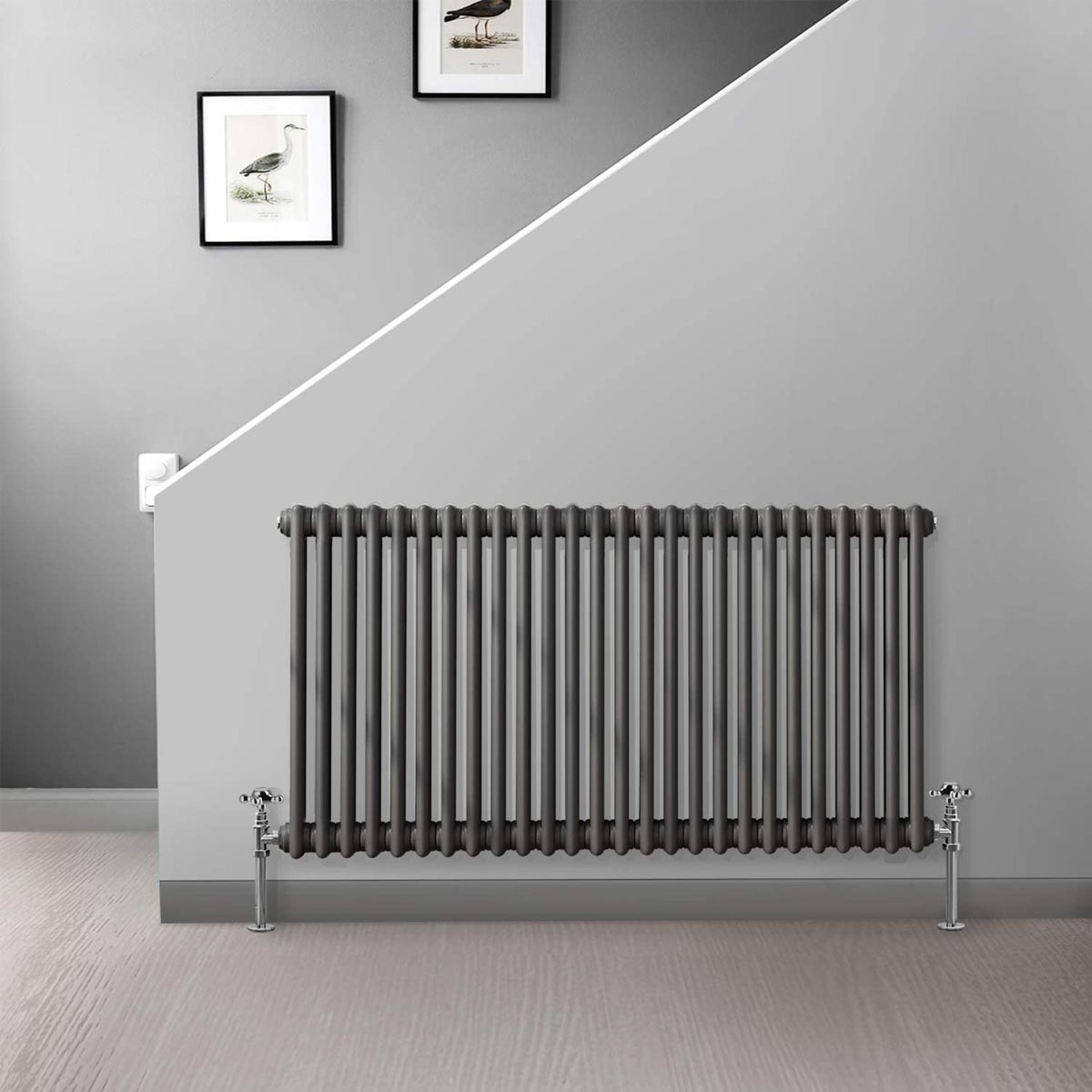
Panel radiators and tubular radiators both serve hydronic heating systems, but they address different project priorities. Distributors and specifiers should compare output, appearance, installation space, cleaning requirements and price position.
Steel panel radiators
Steel panel radiators are widely used in residential and commercial projects because they provide strong heat output in compact sizes. Type 11, 21, 22 and 33 constructions offer progressively greater depth and convector surface. Standardised heights and lengths simplify range planning.
Tubular and column radiators
Tubular radiators use repeated steel sections or tubes to create vertical, horizontal and traditional column forms. They are useful where visual design, unusual dimensions or architectural character is important. Vertical models can use narrow wall areas effectively.
Key comparison points
- Output density: panel types can deliver high output from a compact footprint.
- Design flexibility: tubular forms offer more proportions and visual styles.
- Cleaning: open tubular construction may suit hygiene-sensitive environments.
- Range complexity: panel radiators are easier to standardise for warehouse stock.
- Finish options: both categories can support white and selected colour programmes.
Building a balanced project schedule
Many projects use panel radiators for standard rooms and tubular or designer radiators for entrances, living spaces and visible architectural areas. Bathrooms may use dedicated heated towel rails.
Explore our radiator product range and compare the detailed tubular radiator guide.